Back
B2B SaaS
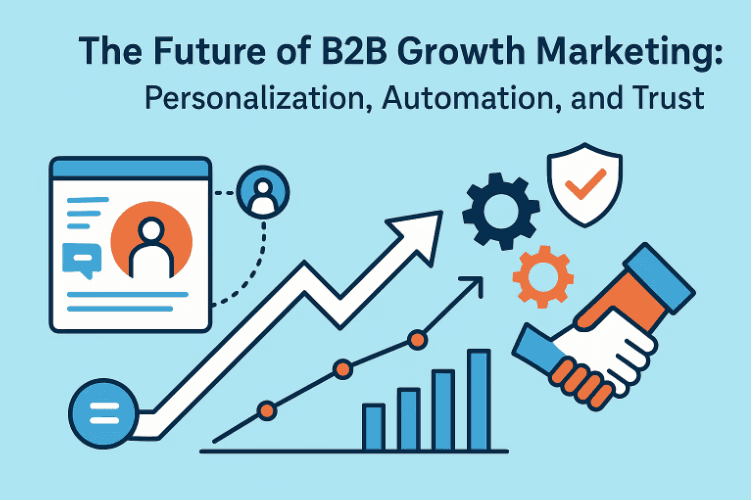
The Future of B2B Growth Marketing: Personalization, Automation, and Trust
1. Introduction
In 2025, B2B marketing is undergoing a transformation, powered by AI, automation, and rising expectations for trust. According to Content Marketing Institute, 95% of B2B marketers report using AI-powered tools, though only a small fraction have reached advanced maturity. Content Marketing Institute Meanwhile, personalization remains more aspirational than real: 89% of organizations say they personalize content, but most do so in superficial ways. Content Marketing Institute
As buyer behavior becomes more sophisticated, B2B companies can no longer rely on broad campaigns. The future lies in combining personalization, automation, and trust-building to deliver deeply relevant experiences at scale. This is where a growth-focused sales and marketing partner for startups, like Coresium, can lead the way, blending strategy, execution, and brand credibility.
2. What Is Modern B2B Growth Marketing?
Modern B2B growth marketing integrates three pillars:
Personalization — tailoring content, recommendations, and experiences based on buyer data, behavior, and intent.
Automation — using AI, workflows, predictive analytics, and orchestration to scale and optimize.
Trust — demonstrating credibility, transparency, data security, and authenticity in communications.
Instead of isolated campaigns, the future is about synchronized systems where every touchpoint, email, web, outreach, content feels cohesive, relevant, and trustworthy.
3. Pillar 1: Personalization
When executed well, personalization shifts audiences from feeling like statistics to feeling like individuals.
McKinsey reports that 71% of consumers expect personalized interactions, and 76% are frustrated when they don’t get them. McKinsey & Company
In B2B, most marketers currently apply simple names-in-email tactics (59%), but only ~5% achieve advanced, cross-channel personalization. Content Marketing Institute
To lead in 2025, B2B firms must move beyond token personalization — dynamically adjusting messaging, offers, content sequences, and journeys based on real-time behavior, intent data, and predictive models.
4. Pillar 2: Automation
Automation is no longer optional — it's foundational.
Around 50% of companies now use marketing automation, with some platforms delivering 10%+ revenue boosts within 6–9 months.
Vidico reports 80% of B2B marketers now use AI-driven marketing automation, and Account-Based Marketing (ABM) delivers 208% higher ROI compared to traditional methods.
Automation should not replace strategy or human touch. Instead, it should handle repetitive tasks, trigger context-aware workflows, and allow your team to focus on high-value creative and relational work.
5. Pillar 3: Trust
In B2B, trust matters even more than in consumer markets.
Buyers are increasingly sensitive to privacy, data usage, and the authenticity of communications.
A study in e-commerce found that trust is a key determinant of consumer acceptance of AI, especially in intelligent or automated systems. arXiv
Trust is built by being transparent about data usage, being consistent in messaging, ensuring security, honoring promises, and delivering value over time.
You might also like