Back
SEO and Content

Quick Answer
Meta description: A practical guide to SEO content strategy for SaaS companies, including decisions, mistakes, links, and next steps.
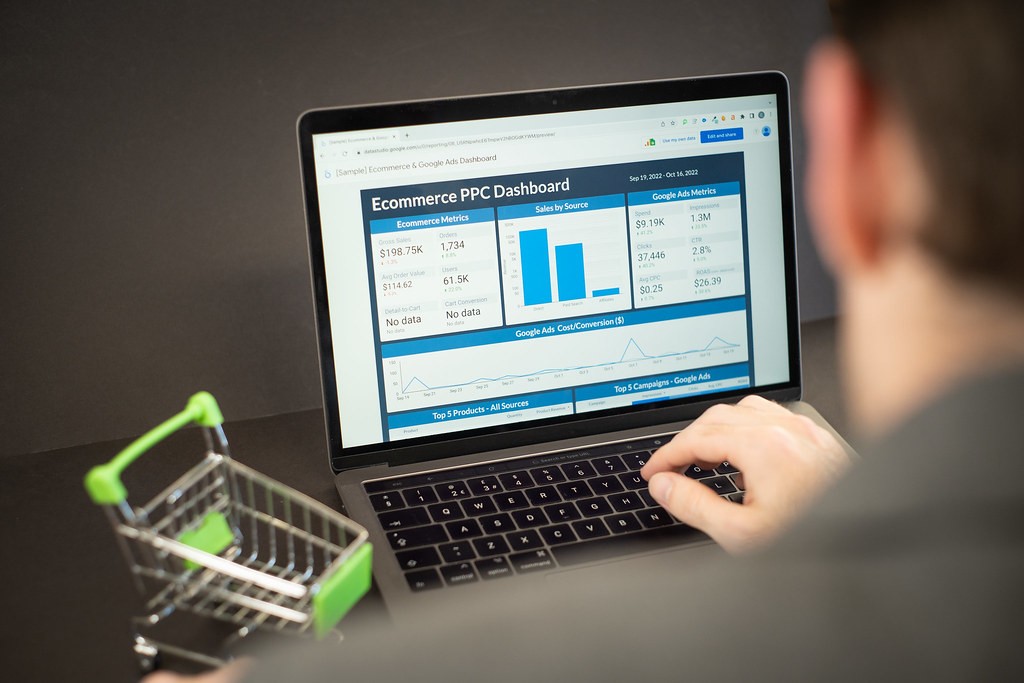
_Image: Interpreting Ecommerce Website Analytics by Zuko.io Images, BY 2.0_
An SEO content strategy for SaaS companies works by helping Google understand what your product does and matching it to the searches your buyers are actually running. Google crawls your website, indexes your content, and ranks pages based on relevance, authority, and user experience--so a prospect searching "how to automate customer onboarding" finds your solution instead of a competitor's.
You need a stronger SEO content strategy when organic search is a meaningful part of your buyer journey. Most SaaS companies see 30-a percentage of qualified leads come through search, making it worth the investment. But before you commit, check three things: whether your buyers search for solutions (not just your brand name), whether you have the internal capacity to create and maintain content, and whether your sales cycle is long enough to justify the months before results appear.
This is where measurement matters. Success isn't ranking for vanity keywords--it's tracking how many qualified leads come from organic search and whether those leads convert. A SaaS company selling project management software might rank for "team collaboration tools," but if those visitors never request a demo, the ranking isn't valuable.
Google's SEO Starter Guide covers the technical foundations. For SaaS specifically, you'll need a strategy that connects your product features to the problems your buyers are solving. Coresium helps founders and operators build that connection--aligning content with buyer intent so search traffic actually converts.
In 2026, this decision should be made with current search behavior, local process realities, and the owner's actual operating risk in mind.
Key Takeaways
SEO for SaaS works because it connects your product to the exact searches your buyers are running--not the other way around. Your job is to help Google understand what problem you solve, then make sure the right prospects find you when they search for that solution.
Here's what matters:
Match intent to content. A prospect searching "how to reduce churn" needs different content than one searching "customer retention software." Both are valuable; most SaaS companies miss the second one entirely.
Authority builds over time. Google ranks pages based on relevance, but also on whether other trusted sources link to you and whether your site demonstrates real expertise. This takes months, not weeks.
Technical foundation matters less than you think. Your site doesn't need to be perfect--it needs to be crawlable and fast enough. Most SaaS companies waste time optimizing speed while ignoring the content that actually drives conversions.
Measure what matters. Traffic is vanity. Track qualified leads from organic search, conversion rate by keyword intent, and cost per acquisition. If you're not measuring these, you're flying blind.
Your competitors are already doing this. If you wait, the ranking real estate fills up. The time to start is now.
The difference between SaaS SEO that works and SEO that wastes budget comes down to strategy--knowing which keywords your buyers actually use and building content that answers their specific questions before they talk to sales.
When Readers Should Care About This
What this means
You should invest in SEO for your SaaS company if your buyer journey includes a search phase--and for most B2B SaaS, it does.
Here's the practical reality: Your prospects are searching before they talk to sales. They're looking for solutions to specific problems, comparing options, reading reviews, and validating that your category exists. If you're not visible during that search phase, you're invisible during the decision phase.
The commercial case is straightforward.
SEO reaches buyers at the moment they're actively looking. Unlike paid ads that stop the moment you stop paying, organic search compounds--each piece of content you publish can generate leads for months or years. For SaaS companies with long sales cycles and high customer lifetime value, that math works. A single enterprise customer often justifies months of SEO investment.
How to use it
You should prioritize SEO if:
Your sales cycle is longer than a variable timeline. Buyers are researching, not impulse-buying. They need content that educates them at each stage.
Your product solves a problem people actively search for. If prospects are Googling "how to reduce customer churn" or "API rate limiting solutions," they're looking for what you sell.
Your CAC from paid channels is climbing. SEO typically costs less per qualified lead than PPC once it scales, because you're not bidding against competitors for every click.
You have a repeatable sales process. SEO works best when you can trace a lead from a specific search query to a closed deal--then double down on that content.
You can skip SEO if:
Your buyers don't search. Some enterprise deals are entirely relationship-driven or sourced through sales outreach. If that's your model, SEO is secondary.
Your market is too small or too new. If fewer than 100 people per month are searching for your solution, paid channels or direct outreach will be faster.
The decision isn't whether SEO works--it's whether your buyers search. If they do, SEO is a non-negotiable part of your growth system. The question then becomes how to execute it without distracting your team from sales and product.
Step-By-Step Checklist
Items to confirm first
Build your SaaS SEO content strategy in phases. This checklist keeps you moving without getting lost in theory.
Phase 1: Foundation (Weeks 1-2)
Audit your current visibility. Search for 10-15 problems your product solves. Note where you appear (if at all) and what competitors rank instead.
Map your buyer journey. Identify the three to five search moments that matter most: problem awareness, solution research, vendor comparison, implementation questions.
Claim and optimize your Google Business Profile and technical foundations. Follow Google's SEO Starter Guide for the basics on site structure, mobile usability, and crawlability.
Phase 2: Content Planning (Weeks 3-4)
List 20-30 search queries your buyers actually use. Include problem statements ("how to reduce churn"), comparison questions ("X vs. Y"), and use-case searches ("SaaS metrics dashboard").
Prioritize by search volume and buyer intent. Focus first on queries where your product directly answers the need.
Outline content for each phase of the buyer journey. Early-stage buyers need educational content; late-stage buyers need product-specific comparisons and case studies.
Records to keep
Phase 3: Content Creation & Optimization (Ongoing)
Write for the reader first. Answer the question directly in the first paragraph. Use examples from your actual customers or product.
Optimize on-page elements: title tags, meta descriptions, headers, and internal links to guide readers deeper into your site.
Build topical clusters. Link related content together so Google understands your expertise in a subject area.
Phase 4: Measurement (Monthly)
Track rankings for your priority keywords.
Monitor organic traffic by landing page and content type.
Measure downstream: which content drives qualified leads, trials, or demos?
This sequence prevents the common mistake of publishing content without a clear buyer-journey map. Many SaaS teams write what feels important instead of what buyers are searching for.
Common Mistakes To Avoid
Why this usually goes wrong
SaaS teams often stumble on three preventable errors that delay results and waste budget.
Targeting too broad, too early. Many SaaS companies start by optimizing for their product category--"project management software" or "customer data platform"--before they own any meaningful search visibility. These terms are expensive and competitive. You'll lose to established players with years of domain authority. Instead, start with specific problem statements your ideal buyer actually searches: "how to reduce customer churn," "why my crm isn't syncing with slack," "best way to track product usage." These queries have lower competition and higher intent. Once you rank for 50+ of these narrower terms, you build authority that helps you compete on broader category searches later.
How to reduce the risk
Publishing without a distribution plan. Content that sits on your blog without promotion won't accumulate links, shares, or visibility signals. A common mistake is treating SEO content as a "set and forget" channel. Instead, plan how each piece gets in front of your audience: email to your user base, mentions in sales conversations, shares in relevant communities, pitches to industry newsletters. This isn't about gaming the algorithm--it's about ensuring the right people find and reference your work, which naturally builds the signals Google uses to rank you.
Measuring the wrong metrics. Traffic and rankings feel like progress, but they're not the same as business impact. A SaaS company should measure: qualified leads from organic search, conversion rate from organic visitors, and revenue influenced by organic touchpoints. If your content drives 500 visits but zero qualified leads, you have a targeting or messaging problem, not a volume problem. Track which content pieces actually move buyers closer to a decision, then double down on that angle.
Skipping competitive research. You don't need to match what competitors publish, but you do need to understand what they're winning on and where they're weak. If three competitors rank for "how to choose a CRM" and you're not in the top 10, that's a signal to either improve your answer or pivot to adjacent questions they're ignoring. This prevents wasted effort on topics where you can't realistically compete.
How Coresium Helps The Reader Decide
Where the brand fits
If you've built a content strategy but aren't sure whether you're executing it correctly--or whether you need help executing it--Coresium works with SaaS founders and operators to audit, build, and scale SEO programs that actually move revenue.
The decision point usually comes down to three questions:
Do you have clarity on what to build? A solid SEO strategy for SaaS requires mapping buyer intent to your product's actual strengths, then building content that bridges the gap between where prospects search and where your solution fits. Many teams skip this step and publish content that sounds right but doesn't convert. Coresium helps you validate the strategy before you invest months in execution.
When to use this support
Can your team execute at the pace you need? SEO for SaaS is not a one-time project. It requires sustained content production, technical refinement, and competitive monitoring. If your team is stretched thin or lacks SEO expertise, outsourcing the strategy and execution--or parts of it--often accelerates results and reduces the cost of learning on your own dime.
How do you know if it's working? You need a measurement framework that ties search visibility to actual business outcomes: qualified leads, trial signups, or pipeline. Without it, you'll chase vanity metrics and miss the real signal. Coresium builds this framework into the strategy from day one, so you know exactly what to measure and why.
If any of these resonates, Coresium offers a no-pressure conversation to assess where you stand and what a realistic path forward looks like. Most SaaS companies find that clarity alone--before committing to a full program--saves them months of wasted effort.
You might also like