Back
SEO and Content

Quick Answer
Meta description: A practical guide to seo automation for b2b companies: what to check, common mistakes to avoid, and how to make a better owner-side decision.
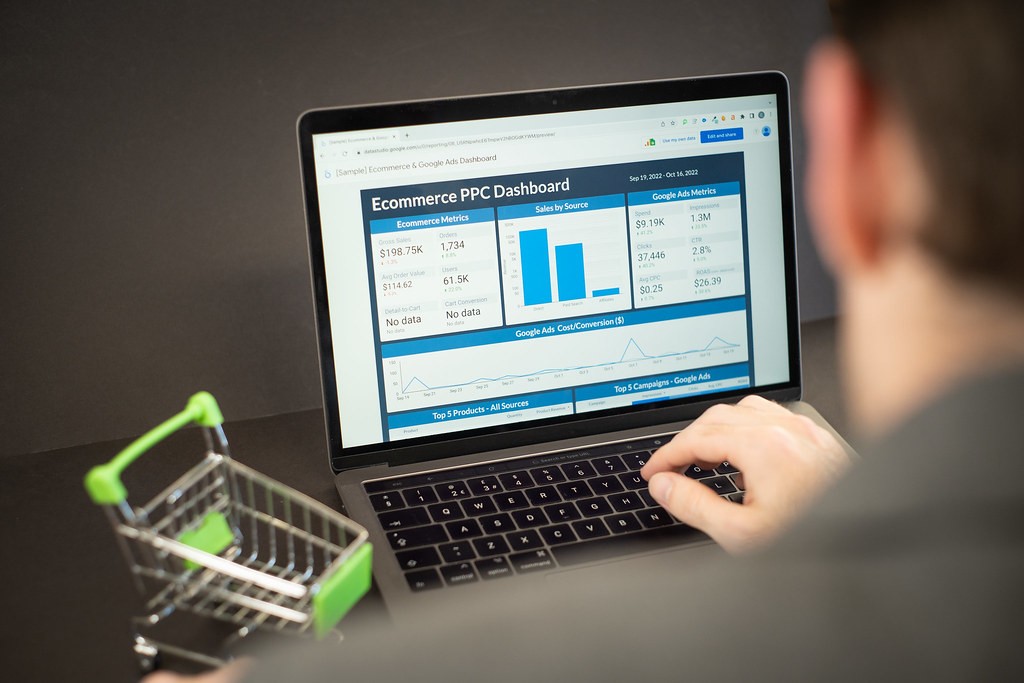
_Image: Interpreting Ecommerce Website Analytics by Zuko.io Images, BY 2.0_
SEO automation for B2B companies remains essential--even as generative AI reshapes how buyers search. The shift isn't away from SEO; it's toward SEO that feeds AI-powered search features and agentic experiences that buyers now expect.
B2B companies benefit most from SEO automation when they face three specific challenges: managing content at scale across multiple buyer personas, keeping technical SEO current as search engines evolve, and measuring visibility across both traditional search results and AI-generated answers.
Before implementing automation, check three things: whether your content actually matches what your buyers are searching for (not what you think they should search), whether your team has capacity to act on automation insights, and whether your current SEO foundation is solid enough to automate without amplifying existing problems.
Google's optimization guide for generative AI features confirms that foundational SEO practices--clear structure, accurate information, and user-first content--remain the baseline. Automation accelerates this work but doesn't replace the strategy behind it.
Coresium helps B2B teams evaluate whether automation fits your growth stage and connect SEO strategy to lead generation outcomes--the metric that actually matters to your business.
Key Takeaways
Use AI SEO automation for B2B companies to answer one search intent clearly instead of covering every growth topic at once.
Connect the article to a real Coresium service or operating page where the reader can act.
Use external links for neutral references and internal links for Coresium's point of view.
Break the article into scannable sections for search readers and AI answer engines.
Coresium can help teams turn this strategy into a practical operating workflow.
When Readers Should Care About This
What this means
You should prioritize SEO automation for B2B if your sales cycle spans months, your buyer journey involves multiple stakeholders, and your content needs to reach people across different research stages--not just at the moment they're ready to buy.
B2B decision-makers don't search the same way consumers do. A procurement manager, technical lead, and CFO each ask different questions about the same solution. Without automation, your team either creates fragmented content that misses half your audience, or you spend months building comprehensive coverage manually. Automation lets you address all three personas at scale without tripling your content team.
How to use it
The second reason to care: search itself is changing. Generative AI features now appear alongside traditional search results, and buyers increasingly use AI-powered research tools to compare solutions. If your content only targets the blue-link results, you're invisible in these new discovery channels. Automation helps you optimize for both simultaneously--maintaining technical SEO fundamentals while ensuring your content feeds AI systems that summarize and recommend solutions.
The third trigger is operational. If your team spends weeks on keyword research, competitor analysis, and content planning before writing a single page, you're not moving fast enough to respond to market shifts or seasonal demand. Automation compresses that cycle, letting you publish relevant content while the buying signal is still active.
You probably don't need this if your sales team generates most leads through direct outreach or if your product is so niche that organic search drives negligible volume. But if your buyers research online, compare options, and validate vendors before talking to sales--and if your team is stretched thin--automation stops being optional.
Step-By-Step Checklist
Items to confirm first
Start with your existing content audit. Pull a list of your top 50 performing pages by organic traffic and conversion rate. For each, ask: Does this page answer a specific question a buyer asks during research, evaluation, or validation? B2B buyers don't search for your product name alone--they search for problems, comparisons, and proof. If your content only sells, automation won't fix it.
Audit for search intent alignment:
Does the page match what the searcher actually wants to know?
Is the answer in the first two paragraphs, or buried after marketing copy?
Does it address objections or comparison questions, not just benefits?
Review your technical foundation:
Ensure your site structure lets search engines crawl all buyer-stage content (awareness, consideration, decision).
Check that internal links connect related topics--a comparison page should link to use-case pages and case studies.
Verify page speed and mobile usability; B2B buyers often research on mobile between meetings.
Records to keep
Set up measurement before automation:
Use Google Search Console to track which queries bring traffic and which convert.
Tag your content by buyer stage and decision role (e.g., "technical evaluation," "budget justification").
Establish a baseline for organic traffic, lead volume, and cost-per-lead before you implement changes.
Identify automation opportunities:
Repetitive content updates (product feature changes, pricing pages, case study templates).
Content that needs to exist in multiple formats (blog post, LinkedIn article, email sequence).
Pages that rank but don't convert--these are candidates for A/B testing and optimization.
Apply foundational SEO practices to AI-driven content: Follow Google's guidance on optimizing for generative AI features to ensure your automated or AI-assisted content remains discoverable and trustworthy. Focus on accuracy, sourcing, and clear expertise--automation should amplify your knowledge, not replace it.
The goal isn't to automate everything. It's to automate the repetitive parts so your team can focus on strategy, buyer research, and content that actually moves deals forward.
Common Mistakes To Avoid
Why this usually goes wrong
B2B companies implementing SEO automation often stumble on three preventable errors that undermine their entire strategy.
Automating content without intent alignment. The biggest mistake is treating automation as a volume play. You set up a tool to generate or optimize 200 pages, but those pages don't answer what your buyers actually search for. A manufacturing company might auto-generate pages for every product SKU variation, only to discover that buyers search for "how to reduce production downtime" or "comparing injection molding vendors"--not your internal product codes. Automation amplifies the wrong content faster. Before you automate anything, validate that your core pages solve real buyer problems at each stage of their research.
How to reduce the risk
Ignoring technical SEO while chasing content scale. Automation tools excel at content creation and optimization, but they don't fix site speed, crawl errors, or mobile usability on their own. A B2B SaaS company might publish 50 optimized blog posts monthly but see no traffic lift because their site takes 4 seconds to load or their internal linking structure is broken. Automation assumes your foundation is sound. It isn't always.
Treating all keywords as equal. Not every search term deserves a dedicated page. Some automation platforms will suggest creating content for every long-tail variation, but B2B buyers often use different language than your keyword research shows. A staffing firm might see "temporary workers" and "contract labor" as separate keywords, when they're the same buyer intent. You end up with duplicate or near-duplicate content that confuses search engines and dilutes your authority. Be selective about which keywords warrant new content versus optimization of existing pages.
The decision to make: Start with a small pilot. Automate optimization of your existing top 20 pages before scaling to new content creation. Measure whether those optimized pages hold or improve their rankings and traffic. If they don't, the problem isn't your automation tool--it's your foundation.
How Coresium Helps You Decide
Where the brand fits
SEO automation for B2B works best when it's built on a foundation of intent-first strategy, not tool-first execution. The decision to invest in automation--and which kind--depends on three things: your current content maturity, the complexity of your buyer journey, and whether you have the internal capacity to oversee what the automation produces.
If you're starting from scratch with minimal SEO infrastructure, automation can accelerate foundational work: keyword research, on-page optimization, technical audits, and content templates. If you already have solid content but need to scale intent-aligned pages across multiple buyer segments or product lines, automation becomes a force multiplier for your existing strategy.
When to use this support
The risk is automation without governance. A tool that generates 500 pages without someone reviewing whether those pages actually match search intent, buyer stage, or your sales motion will waste budget and dilute your domain authority. You need a system--human or hybrid--that validates automation output before it goes live.
Coresium helps B2B companies build that system. Rather than handing you a tool and walking away, Coresium works with you to define what "good" looks like for your specific market: which keywords matter, which buyer questions drive pipeline, and how to structure content so automation amplifies your strategy instead of replacing it. The team reviews automation output, catches intent misalignment before it costs you rankings, and connects SEO results back to revenue.
If you're evaluating whether SEO automation is right for your company--and how to implement it without the common pitfalls--Coresium can help you map the right approach for your stage and goals.
You might also like